
Table of Contents
- The Touch and Feel Test
- Understanding Long Staple Cotton vs Short Staple
- How to Test Fabric for Cotton Content
- What Is Pima Cotton and Why It Matters
- Thread Count and Weave Tightness
- Visual Inspection and Post-Wash Performance
- Sustainability and Certifications for High Quality Cotton
- Conclusion
Last Updated: August 16, 2026
The Touch and Feel Test
The most immediate way to identify high quality cotton starts with your hands. Run your fingers across the fabric surface and pay attention to what you feel. High quality cotton has a smooth, soft hand that feels consistent across the entire piece. The fabric should have a gentle drape when held loosely, not stiff or papery.
When you squeeze quality cotton, it compresses easily and springs back without creasing permanently. Lower quality cotton often feels coarse, thin, or overly limp. A common mistake is confusing softness with quality, some fabrics feel soft due to chemical treatments that wash out after a few cycles. True softness comes from the fiber itself and the construction method.
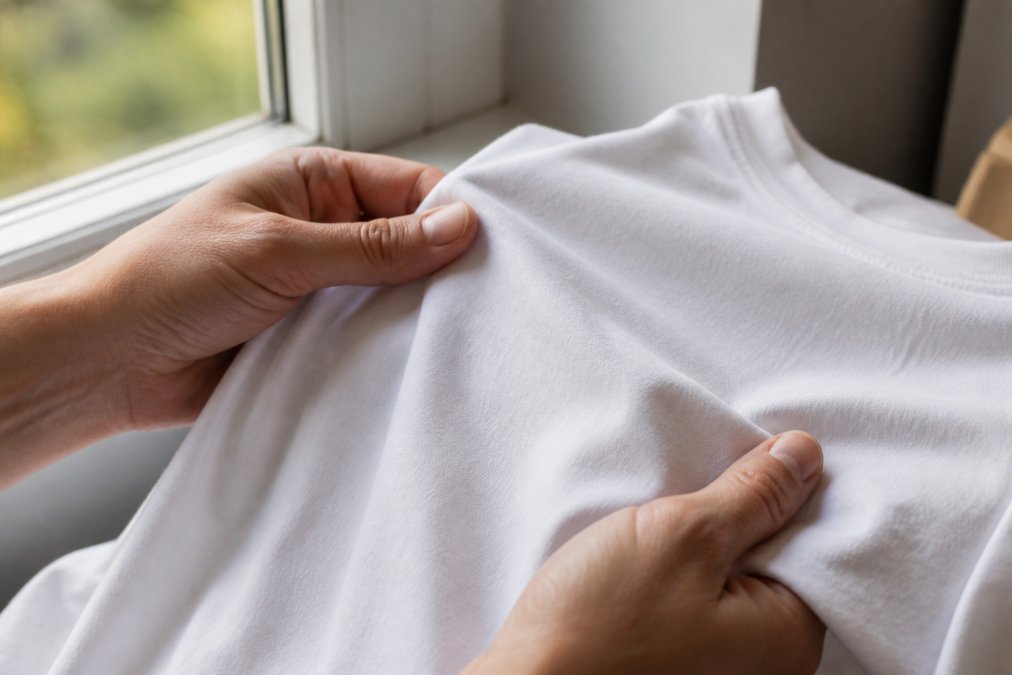
The weight of the fabric tells you something important. Pick up the garment and feel its heft. Quality cotton has appropriate weight for its intended use, a t-shirt should feel substantial enough to hold its shape, not flimsy. This relates directly to how the fabric will perform after washing and wearing. Heavier cotton generally indicates better fiber density and longer durability.
Understanding Long Staple Cotton vs Short Staple
Long staple cotton refers to cotton fibers that measure 1.25 inches or longer. This distinction matters because longer fibers create stronger, smoother yarn and therefore more durable, softer fabric. Extra-long staple (ELS) cotton, fibers exceeding 1.38 inches, represents the premium tier. Pima and Egyptian cotton varieties are typically long staple, which is why they command higher prices and deliver superior performance.
Short staple cotton has fibers under 1.25 inches. These shorter fibers must be twisted more tightly together to create yarn, which produces a rougher fabric surface and weaker tensile strength. Short staple cotton is cheaper to produce and more prone to pilling, fading, and losing shape over time. Most mass-market t-shirts use short staple cotton because the cost advantage is significant.
The practical difference becomes obvious after five to ten washes. Long staple cotton garments maintain their softness, color, and shape. Short staple cotton begins to show wear, pilling appears, colors fade faster, and the fabric loses its original drape. When shopping for timeless wardrobe staples, long staple cotton is the only sensible choice because it actually lasts.
To identify which type you're buying, check the label. Legitimate manufacturers clearly state "Pima cotton," "Egyptian cotton," or "long staple cotton." If the label simply says "cotton" with no qualifier, it's almost certainly short staple. This labeling transparency is your first filter when how to identify high quality cotton becomes a purchasing decision.
How to Test Fabric for Cotton Content
The burn test provides direct evidence of fiber composition. Cut a small sample from an inconspicuous area, a seam allowance or interior tag works well. Hold the sample with tweezers over a flame or lit match for a few seconds, then remove it from the heat. Pure cotton burns quickly with a bright yellow flame and leaves a soft, gray ash that crumbles easily. The smell resembles burning paper or wood.
Synthetic blends behave differently. Polyester melts rather than burns, creating a black, hard residue that smells acrid. Cotton-polyester blends burn more slowly and leave a harder ash. This test is quick, inexpensive, and reveals exactly what you're dealing with. A 100% cotton garment should burn cleanly with minimal residue.
Check the label for fiber content percentage. High quality t-shirts should be 100% cotton or, in rare cases, a deliberate cotton blend where the secondary fiber serves a specific purpose (like 2% elastane for stretch recovery). Anything less than 95% cotton suggests the manufacturer cut corners on material cost. Labels that don't clearly state fiber percentages are a red flag, legitimate brands disclose this information prominently.
The transparency test also works. Hold the fabric up to bright light and look through it. High quality cotton has slight opacity that prevents you from seeing details through the weave. Thin, low-quality cotton becomes nearly transparent under the same light. Opacity indicates proper fiber density and weave tightness, both markers of durability.
What Is Pima Cotton and Why It Matters
Pima cotton is a specific variety of cotton plant that produces extra-long staple fibers. The name comes from the Pima people of the American Southwest, though most commercial Pima cotton now grows in Peru, Egypt, and Australia. Pima fibers typically measure 1.4 to 1.6 inches, significantly longer than standard cotton. This length is the foundation of Pima's superior qualities.
Because Pima fibers are longer and stronger, yarn spun from Pima cotton requires less twist to achieve comparable strength. Less twist means a smoother surface, which translates directly to softer fabric. Pima cotton also resists pilling better than short staple varieties because the longer fibers hold together more securely in the weave. After dozens of washes, a Pima cotton t-shirt maintains its original texture while standard cotton begins to deteriorate.
Pima cotton also holds dyes more effectively than short staple cotton. Colors remain vibrant longer and fade more gradually. This matters if you're building a capsule wardrobe where each piece needs to coordinate for years. Faded, dull colors force you to replace items prematurely, which contradicts the whole point of investing in quality basics.
The trade-off is price. Pima cotton costs more to produce and commands higher prices in retail. However, the cost-per-wear calculation often favors Pima. A Pima cotton t-shirt that lasts five years costs less per wear than a cheap alternative you replace annually. For minimalist fashion enthusiasts and professionals building lasting wardrobes, Pima represents the rational choice for how to identify high quality cotton at the point of purchase.
Thread Count and Weave Tightness
Thread count measures the number of threads woven into one square inch of fabric. A thread count of 200-300 is typical for quality cotton t-shirts. Higher thread counts increase density and opacity but can also make fabric feel stiff if the weave becomes too tight. The goal is balance, enough threads to create durability without sacrificing breathability and drape.
Weave tightness describes how closely the threads are packed together. A tightly woven fabric resists pilling, holds its shape better, and lasts longer. Loose weaves create a softer initial feel but deteriorate faster. The relationship between thread count and weave tightness determines how fabric performs over time. Two t-shirts with identical thread counts can feel and perform completely differently based on how tightly the weaver interlocked the threads.
Combed cotton indicates that the fibers underwent an additional processing step that removed short fibers and aligned the remaining fibers parallel to each other. Combed cotton produces stronger yarn and smoother fabric compared to carded cotton, which receives no such treatment. Labels that specify "combed cotton" signal manufacturers committed to quality. This process adds cost but delivers measurable benefits in softness, durability, and color retention.
GSM (grams per square meter) is another measure of fabric density. Higher GSM indicates heavier, more substantial fabric. Quality t-shirt cotton typically ranges from 150-200 GSM. Anything below 120 GSM feels thin and cheap. Above 220 GSM, the fabric becomes too heavy for comfortable everyday wear. Understanding these technical specifications helps you evaluate fabric quality objectively rather than relying solely on feel or price.
Visual Inspection and Post-Wash Performance
Examine the weave pattern closely. High quality cotton displays an even, consistent weave with no visible gaps or thin spots. Run your eyes across the fabric surface under good lighting. You should see uniform texture throughout. Uneven weaving indicates rushed manufacturing or lower quality fibers that resist consistent tension.
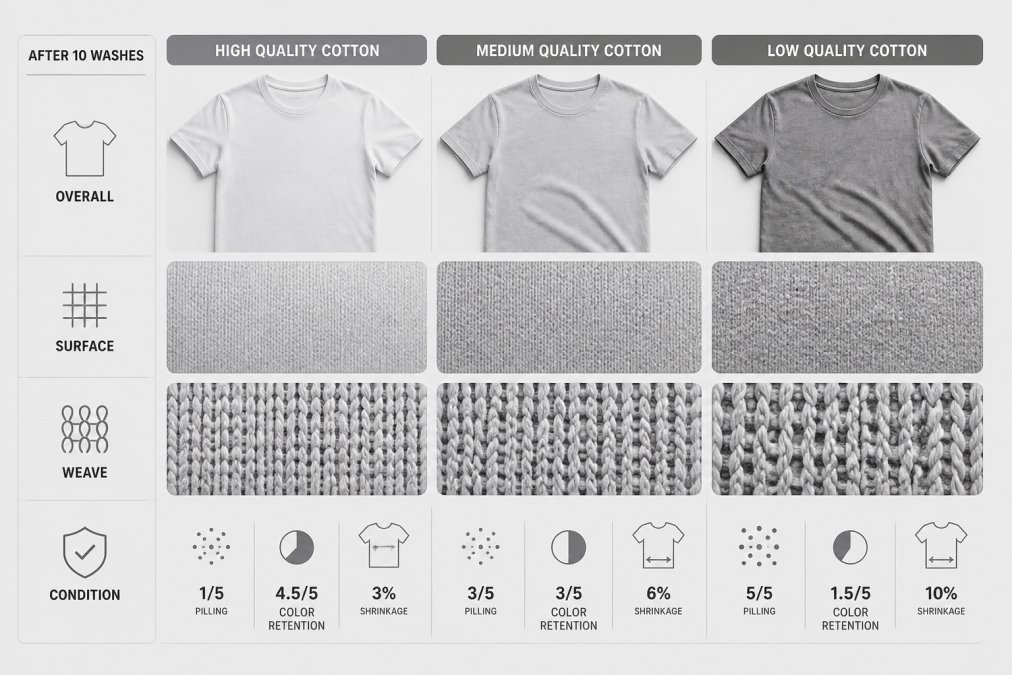
Check for pilling on the fabric surface. Pilling, those small balls of fiber that form on the surface, indicates the fibers lack sufficient strength to stay anchored in the weave. Quality cotton shows minimal or no pilling even after repeated wear and washing. This is one of the most visible markers of durability. A t-shirt covered in pills after five washes failed the quality test, regardless of its original price.
Post-wash performance reveals the true measure of quality. Wash a garment according to care instructions and evaluate how it changes. Quality cotton maintains its shape, color, and texture. The fabric should not shrink excessively, expect 2-5% shrinkage maximum. Colors should not fade noticeably. Seams should remain strong and not separate. If a garment deteriorates after just a few washes, the materials or construction failed to meet acceptable standards.
Moisture wicking and breathability matter for comfort and longevity. Quality cotton naturally absorbs moisture and allows air circulation. When you wear a quality cotton t-shirt, it feels comfortable against your skin throughout the day and doesn't trap heat. Poor quality cotton sometimes feels damp or clingy because the weave is too tight or the fibers lack proper structure. This discomfort often drives people to replace garments prematurely, making inferior cotton actually more expensive over time.
Sustainability and Certifications for High Quality Cotton
Sustainable cotton production matters if you're an eco-conscious consumer building a lasting wardrobe. Look for certifications that verify environmental responsibility. The Global Organic Textile Standard (GOTS) certifies organic cotton grown without synthetic pesticides or fertilizers. GOTS certification also requires fair labor practices throughout the supply chain. Garments with GOTS certification cost more but deliver environmental assurance alongside quality.
Fair Trade certification ensures cotton farmers receive fair compensation and work under safe conditions. This matters for the people producing the fibers you wear. Fair Trade certified cotton typically commands a premium price, but that premium directly supports better working conditions and community development in cotton-growing regions.
Water usage in cotton production affects sustainability significantly. Cotton is a thirsty crop, requiring substantial irrigation in most regions. Manufacturers committed to sustainability invest in water-efficient farming practices and dyeing processes. Some brands publish transparency reports showing exactly where their cotton comes from and how it was produced. This transparency signals confidence in their practices.
Brands that invest in quality fibers and sustainable practices typically maintain that commitment throughout their operations. This alignment between material quality and environmental responsibility creates the foundation for wardrobe pieces that last, and feel good to wear.
Mercerized cotton undergoes a chemical treatment that increases luster and strengthens fibers. Mercerization improves color retention and adds subtle sheen without compromising the cotton's natural properties. Quality manufacturers often mercerize their cotton to enhance both appearance and durability. This processing step is another marker of commitment to quality, though it adds cost to production.
Identifying high quality cotton requires attention to multiple factors working together. The touch and feel test gives you immediate feedback. Understanding fiber length, thread count, and weave tightness provides technical grounding. Certifications and transparency reports reveal whether manufacturers prioritize sustainability and fair practices. When you combine these assessment methods, you develop genuine expertise in evaluating cotton quality.
The investment in quality cotton pays dividends over years of wear. Garments that maintain their softness, shape, and color become reliable wardrobe staples rather than disposable purchases. Building a capsule wardrobe with truly high quality pieces means fewer purchases overall and greater satisfaction with what you own. POP Inc. focuses on this exact philosophy, providing essential, high quality cotton t-shirts designed to integrate seamlessly into your daily life for years. Start by applying these tests to your next purchase, and you'll immediately recognize the difference quality makes.
Frequently Asked Questions
What type of cotton is considered the highest quality?
Pima and Egyptian cotton are widely regarded as premium grades. Both are extra-long staple (ELS) varieties, meaning their fibers measure 1.4 inches or longer. This greater fiber length produces stronger, more durable yarn with superior softness and reduced pilling. Combed Pima cotton undergoes an additional refinement process that removes short fibers and impurities, further enhancing quality. When identifying high quality cotton, look for these ELS varieties on product labels.
How do I tell if my fabric is 100% cotton?
The most reliable method is the burn test. Cut a small swatch from an inconspicuous area, hold it with tweezers over a flame, and observe the reaction. Pure cotton burns quickly with a bright yellow flame, produces gray ash, and smells like burning paper. Synthetic blends or cotton-polyester mixes burn differently, melting or producing black smoke. Always perform this test in a safe space away from flammable materials. Check the care label first, but the burn test confirms actual fiber content when labels are unclear.
Does high quality cotton really last longer after washing?
Yes. Premium cotton with longer staple fibers and tight weaves resists pilling and maintains its shape through repeated washing. Lower-quality carded cotton, which has shorter fibers and looser construction, tends to pill within a few months and loses softness faster. Post-wash performance is a key indicator: high-quality pieces retain their fabric hand (feel and drape), resist shrinkage beyond 3-5%, and show minimal color fading. When evaluating durability, check customer reviews mentioning performance after multiple wash cycles.
What's the difference between 100% cotton and pure cotton?
These terms are essentially identical in labeling standards. Both indicate the fabric contains only cotton fibers with no synthetic blends. The distinction that matters is fiber quality: 100% cotton can be made from short-staple carded cotton (lower quality) or long-staple combed cotton (higher quality). The label won't always specify this, so use other tests, feel, thread count, weight (GSM), and the burn test, to assess actual quality. Don't assume all 100% cotton products are equivalent.
This article was written using GrandRanker