
Table of Contents
- What a Sustainable Capsule Wardrobe Actually Means
- How to Build a Capsule Wardrobe the Right Way
- Cost Per Wear Calculation: The Metric That Changes How You Shop
- Your Capsule Wardrobe Checklist: The Essential Pieces
-
10 Sustainable Fashion Brands for Capsule Wardrobes, Ranked
- 1. Everlane, Transparent Basics at Accessible Prices
- 2. Pact, GOTS-Certified Organic Cotton for Everyday Wear
- 3. Kotn, Egyptian Cotton Essentials Built to Last
- 4. Amour Vert, Limited-Run Pieces That Reduce Textile Waste
- 5. Girlfriend Collective, Size-Inclusive Activewear from Recycled Materials
- 6. Reformation, Fashion-Forward Styles with Environmental Accountability
- 7. ABLE, Ethical Labor Transparency with Versatile Denim and Apparel
- 8. Cuyana, Fewer, Better Pieces for a Sophisticated Closet
- 9. Eileen Fisher, Circular Fashion with Natural Fibers
- 10. Vetta Capsule, Pre-Curated Collections Designed for Maximum Outfit Combinations
- Care, Repair, and Making Sustainable Fashion Brands Work Long-Term
- Conclusion
Last Updated: August 8, 2026
Building a wardrobe that actually works takes more than buying less. According to the Textile Exchange Preferred Fiber & Materials Market Report, demand for certified sustainable materials has grown consistently year over year, yet most people still end up with closets full of clothes they rarely wear. This guide from POP Inc. breaks down exactly how to build a sustainable capsule wardrobe from the ground up, which materials hold up over time, and which sustainable fashion brands for capsule wardrobes are worth your money in 2026.
The brands on this list were evaluated on three criteria: material quality, supply chain transparency, and genuine versatility for a minimalist closet.
Quick Picks:
- Best for Transparent Basics: Everlane, accessible price points, radical supply chain disclosure
- Best for Activewear: Girlfriend Collective, size-inclusive, made from recycled materials
- Best Pre-Built Capsule: Vetta Capsule, five pieces designed to create dozens of outfits
- Best for Circular Fashion: Eileen Fisher, take-back program, natural fibers, timeless cuts
- Best for Ethical Labor: ABLE, publishes actual wages, strong denim and leather goods
What a Sustainable Capsule Wardrobe Actually Means
A sustainable capsule wardrobe is a curated closet of high-quality, versatile pieces made from ethical and eco-friendly materials, designed to minimize textile waste while maximizing outfit combinations. It combines slow fashion, ethical labor, sustainable materials, supply chain transparency, with minimalism: buying better and keeping pieces longer.
What makes a piece genuinely capsule-worthy? It works across multiple contexts, holds its shape and color after repeated washing, and pairs naturally with at least three other items you own.
How to Build a Capsule Wardrobe the Right Way
Most guides skip the hard part: the decision-making process before you buy anything. Here's the sequence that actually works.
Step 1: Do a Wardrobe Audit
Pull everything out and sort into three groups: wear regularly, wear occasionally, haven't touched in six months. That last group reveals your textile waste problem and your real style preferences. Note the colors you actually reach for and which fabrics you avoid when tired or rushed. Donate or resell what doesn't serve you. Eileen Fisher's Renew take-back program and Cuyana's Lean Closet initiative give pieces a second life rather than sending them to landfill.
Step 2: Define Your Core Pieces by Climate and Lifestyle
Capsule planning isn't one-size-fits-all. A capsule wardrobe for someone in Phoenix looks nothing like one built for someone in Seattle. A remote worker's capsule differs fundamentally from a daily commuter's. Define your "uniform" first, most people wear 20% of their wardrobe 80% of the time.
Step 3: Choose Materials That Last
Material choice is the single biggest factor in garment longevity. Organic cotton, recycled polyester, TENCEL, hemp, and regenerative wool hold structure, resist pilling, and respond well to proper care. A 100% organic cotton tee is easier to care for, more durable, and more recyclable at end of life than a cotton-polyester blend. GOTS-certified organic cotton guarantees both fiber quality and processing standards.
Global Organic Textile Standard certification requirements
Cost Per Wear Calculation: The Metric That Changes How You Shop
Cost per wear is the single most useful framework for evaluating sustainable fashion purchases:
Cost Per Wear = Purchase Price ÷ Number of Times Worn
A $180 coat worn 150 times costs $1.20 per wear. A $40 fast fashion coat worn 15 times costs $2.67 per wear. The cheaper coat costs more. High-quality wardrobe staples from ethical brands feel expensive upfront but are almost always the better financial and environmental decision.
| Garment | Purchase Price | Estimated Wears/Year | Years in Wardrobe | Total Wears | Cost Per Wear |
|---|---|---|---|---|---|
| Quality linen shirt | $95 | 40 | 5 | 200 | $0.48 |
| Fast fashion equivalent | $28 | 30 | 1.5 | 45 | $0.62 |
| Recycled polyester leggings | $88 | 100 | 4 | 400 | $0.22 |
| Basic synthetic leggings | $22 | 80 | 1 | 80 | $0.28 |
| Investment wool coat | $320 | 60 | 8 | 480 | $0.67 |
| Mid-range coat | $120 | 50 | 3 | 150 | $0.80 |
Run this calculation on what you already own to identify which pieces are earning their place and which are dead weight.
Your Capsule Wardrobe Checklist: The Essential Pieces
A functional capsule collection for most American adults contains 30-40 pieces, including shoes and outerwear.
Tops (8-10 pieces):
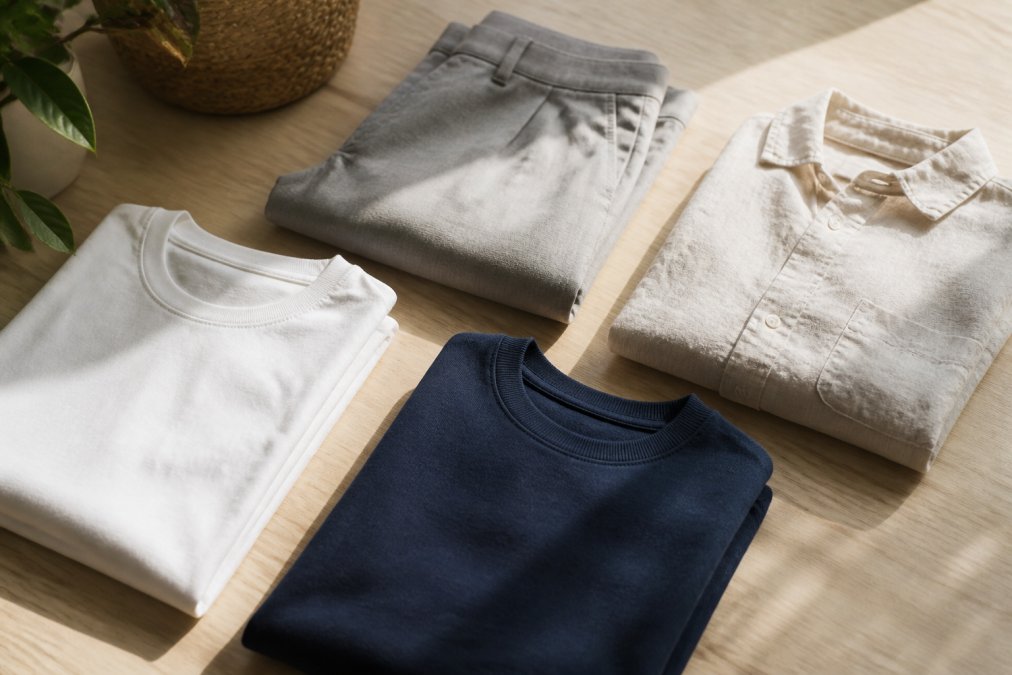
- 2-3 quality t-shirts in neutral tones (white, grey, navy)
- 1-2 long-sleeve shirts or lightweight knits
- 1 button-down shirt (linen for warm climates, cotton oxford for cooler)
- 1 fitted crewneck or v-neck sweater
- 1 heavier knit or cardigan for layering
Bottoms (5-6 pieces):
- 1-2 pairs of well-cut trousers or chinos
- 1 pair of dark-wash straight-leg or slim-fit denim
- 1 versatile skirt or casual dress (if relevant to your lifestyle)
Outerwear (3-4 pieces):
- 1 structured blazer or tailored jacket
- 1 mid-weight coat (wool or wool-blend for cold climates)
- 1 light jacket or trench for transitional weather
Activewear (3-4 pieces):
- 2 pairs of leggings or training shorts
- 1-2 performance tops
Footwear (4-5 pairs):
- 1 pair of clean white sneakers
- 1 pair of leather or leather-alternative loafers or flats
- 1 pair of ankle boots
- 1 pair of sandals (climate-dependent)
Every item should pass the three-pairing test: can it combine naturally with at least three other pieces in your capsule?
10 Sustainable Fashion Brands for Capsule Wardrobes, Ranked
The sustainable fashion brands below were selected specifically for capsule wardrobe building. Each offers genuine versatility, credible sustainability credentials, and pieces designed for garment longevity.
1. Everlane, Transparent Basics at Accessible Prices
Everlane's "Radical Transparency" model discloses factory names, true production costs, and markup ratios. The product range is built for capsule wardrobes: clean cuts, neutral palettes, and everyday fabrics including organic cotton and recycled materials. The direct-to-consumer model keeps prices competitive for the quality level.
Best for: Anyone starting a sustainable capsule wardrobe who wants quality basics without paying luxury prices.
2. Pact, GOTS-Certified Organic Cotton for Everyday Wear
Pact delivers GOTS-certified organic cotton at accessible price points. Every piece is produced in Fair Trade Certified factories, addressing both material and labor ethics. The range focuses on basics: tees, underwear, loungewear, and activewear.
Best for: Budget-conscious shoppers who want certified organic cotton basics without compromising on ethical labor practices.
3. Kotn, Egyptian Cotton Essentials Built to Last
Kotn works directly with Egyptian cotton farmers, controlling quality from field to finished garment. The result is denser, softer fabric more resistant to pilling than standard cotton basics. The limited color palette skews neutral, which is a feature for capsule building.
Best for: People who want the best possible everyday cotton basics and are willing to pay slightly more for genuine material quality.
4. Amour Vert, Limited-Run Pieces That Reduce Textile Waste
Amour Vert produces clothing in limited quantities, treating overproduction as the root cause of textile waste. Materials include TENCEL, organic cotton, and ethical silk. The tree-planting initiative, one tree per t-shirt sold, is a genuine environmental commitment.
Best for: Women who want eco-friendly clothing with genuine design character, not just functional basics.
5. Girlfriend Collective, Size-Inclusive Activewear from Recycled Materials
Girlfriend Collective runs XXS through 6XL across most of its range, backed by SA8000-certified ethical manufacturing. Leggings and sports bras are made from recycled plastic bottles and fishing nets. According to SA8000 social accountability certification standards, SA8000 certification requires verified compliance with labor rights, health and safety, and management systems.
Best for: Anyone who has been excluded by standard sustainable brand sizing, and anyone building an activewear-heavy capsule.
6. Reformation, Fashion-Forward Styles with Environmental Accountability
Reformation proved sustainable fashion doesn't have to mean boring fashion. Each product page includes a "RefScale" showing environmental impact, water use, carbon emissions, and waste, compared to conventional equivalents. Designs are genuinely stylish and hold up across multiple seasons.
Best for: Fashion-conscious women who want ethical manufacturing with a clear aesthetic identity.
7. ABLE, Ethical Labor Transparency with Versatile Denim and Apparel
ABLE publishes the lowest wages paid in its supply chain, not averages, the floor. That level of labor transparency is a direct challenge to every brand hiding behind vague "fair wage" language. The product range centers on denim, leather goods, and apparel designed for longevity.
Best for: Consumers who prioritize ethical labor practices and supply chain transparency, and who want quality denim as a capsule anchor.
8. Cuyana, Fewer, Better Pieces for a Sophisticated Closet
"Fewer, better things" is Cuyana's entire operating philosophy. The Lean Closet initiative lets customers donate old clothes in exchange for store credit, creating a practical circular fashion loop. Pieces are designed to last decades.
Best for: Women building a long-term capsule wardrobe who want premium quality and are prepared to invest accordingly.
9. Eileen Fisher, Circular Fashion with Natural Fibers
Eileen Fisher's Renew take-back program accepts worn garments, refurbishes them, and resells them, creating a genuine second-life system. Materials are anchored in natural fibers: organic linen, organic cotton, hemp, and regenerative wool. The minimalist aesthetic with clean silhouettes works across decades. As documented in EPA textile waste and recycling data, textile waste is one of the fastest-growing waste streams in the US. Eileen Fisher's take-back model directly addresses this.
Best for: Those who want the most credible circular fashion story and who appreciate natural fibers and genuinely timeless design.
10. Vetta Capsule, Pre-Curated Collections Designed for Maximum Outfit Combinations
Vetta Capsule solves the hardest part of capsule wardrobe building: figuring out what actually works together. Each collection is five pieces engineered to create a documented number of outfit combinations. Materials include TENCEL, organic cotton, and deadstock fabrics.
Best for: Anyone who wants a complete, pre-designed sustainable capsule wardrobe without spending hours on capsule planning.
| Brand | Sustainability Focus | Size Range | Best Capsule Category |
|---|---|---|---|
| Everlane | Supply chain transparency | Standard | Everyday basics |
| Pact | GOTS organic cotton, Fair Trade | Standard | Foundational layers |
| Kotn | Egyptian cotton, direct trade | Standard | Premium cotton basics |
| Amour Vert | Limited-run, TENCEL | Standard | Feminine staples |
| Girlfriend Collective | Recycled RPET, SA8000 | XXS-6XL | Activewear |
| Reformation | Per-product impact data | Standard + extended | Fashion-forward pieces |
| ABLE | Wage transparency | Standard | Denim and leather |
| Cuyana | Premium materials, take-back | Standard | Investment pieces |
| Eileen Fisher | Circular take-back, natural fibers | Standard + plus | Timeless outerwear |
| Vetta Capsule | Pre-curated, deadstock fabrics | XS-XL | Complete capsule system |
Care, Repair, and Making Sustainable Fashion Brands Work Long-Term
Buying from the right brands is only half the equation. The other half is how you treat what you own.
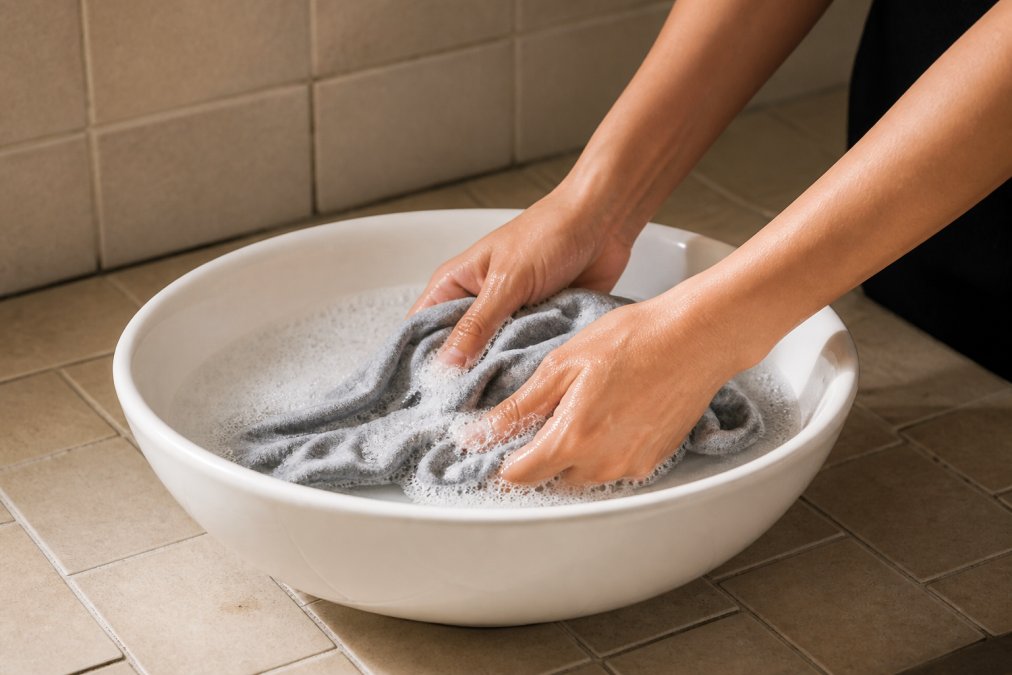
Most garment damage happens in the wash. High heat breaks down natural fibers and causes shrinkage in organic cotton. Cold water washing extends garment life significantly. Air drying instead of machine drying does the same and reduces energy consumption.
Practical care rules for a sustainable capsule:
- Wash on cold, 30°C or below, for most natural fiber garments
- Turn dark denim inside-out to prevent color fade
- Use a mesh laundry bag for activewear and delicate knits
- Air dry flat for knitwear to prevent stretching
- Spot-treat stains immediately rather than running a full hot wash
Learning two basic repairs, reattaching buttons and closing seam splits, extends the life of most garments by years. Many cities have community tailor shops that handle more complex repairs affordably. Tailoring also transforms fit: a well-cut pair of trousers that's slightly too long becomes perfect with a $15 hem.
Storage matters as much as washing. Fold knitwear rather than hanging it to prevent shoulder distortion. Use cedar blocks instead of chemical moth repellents for wool pieces.
Building a sustainable capsule wardrobe is a long-term project, not a weekend shopping exercise. The challenge is developing the discipline to buy less, care more, and measure value in cost per wear rather than purchase price. POP Inc.'s relaxed-fit t-shirts are designed exactly for this kind of wardrobe: versatile unisex and women's options that work as foundational layers across every outfit combination, season after season. Add the pieces that earn their place, and build from there.
Frequently Asked Questions
What is a sustainable capsule wardrobe?
A sustainable capsule wardrobe is a small, curated collection of high-quality, versatile pieces made from eco-friendly or ethically produced materials. The goal is to own fewer garments that work together across many outfits, reducing textile waste and the carbon footprint of your closet. Most sustainable capsule wardrobes contain 25 to 40 items, prioritizing natural fibers, ethical labor practices, and timeless design over trend-driven fast fashion.
How many items should be in a sustainable capsule wardrobe?
Most capsule wardrobe frameworks suggest 25 to 40 pieces total, including tops, bottoms, outerwear, shoes, and accessories. The right number depends on your lifestyle, climate, and how often you do laundry. A busy professional in a four-season climate may need closer to 40 items, while someone in a consistent warm climate can often manage with fewer. Quality over quantity is the core principle, each piece should earn its place.
What materials should I look for in sustainable fashion?
Focus on organic cotton (ideally GOTS-certified), TENCEL or lyocell, recycled polyester (RPET), linen, hemp, and responsibly sourced wool. These materials have lower environmental impact than conventional cotton or virgin synthetics. Avoid fabrics blended in ways that make recycling impossible, such as polyester-cotton blends. Check for certifications like Fair Trade, GOTS, or OEKO-TEX to verify that sustainability claims are backed by independent audits.
Are capsule wardrobes actually more sustainable?
Yes, when built intentionally. A capsule wardrobe reduces how often you buy new clothing, which directly cuts textile waste and lowers your personal carbon footprint. The key is applying cost-per-wear thinking: a $120 organic cotton shirt worn 200 times costs $0.60 per wear, while a $25 fast-fashion shirt worn 10 times costs $2.50 per wear. Fewer, better pieces that last years are more sustainable than a large closet of cheap garments replaced seasonally.
How do I know if a sustainable fashion brand is actually ethical or just greenwashing?
Look for third-party certifications: Fair Trade, GOTS, B Corp, and SA8000 are independently audited and harder to fake than self-declared claims. Check whether the brand publishes its factory names, wages, and supply chain information. Brands like ABLE publish their lowest wages publicly. Vague terms like 'eco-conscious' or 'planet-friendly' without supporting data are red flags. Supply chain transparency is the clearest signal of genuine ethical manufacturing.
This article was written using GrandRanker